A clear breakdown of what actually moves a FICO score, plus practical steps to improve payment history, utilization, credit age, mix, and inquiries.
If you have no credit history, you are not behind. You are just invisible to the scoring system. And credit scores are basically a risk math problem: the bureaus do not grade your potential, your hustle, or your character. They grade what they can measure.
The good news is you can build an initial score and a strong starter profile in months, not years, as long as you take the right steps in the right order. Below is the beginner playbook I wish someone handed me before I spent years learning credit the hard way.

Step 1: Confirm where you stand
Before you apply for anything, confirm what the credit bureaus actually have on you. Sometimes people think they have no credit, but they have an old student loan, an authorized user account, or even a collections account floating around.
Pull your credit reports (free)
You can check your reports from all three bureaus at AnnualCreditReport.com. This does not hurt your score. You are looking for:
- Accounts you do not recognize
- Old addresses or misspellings that could cause mix-ups
- Collections (medical, utilities, old phone bills)
- Student loans that may already be reporting
If you truly have no accounts reporting, great. You are starting clean. If you find errors, dispute them with the bureau. If you find legitimate negatives, handle those first or in parallel so they do not sabotage your early progress.

Step 2: Know what moves your score
You do not need to memorize FICO formulas to build credit, but you do need to understand the levers that move your score.
- Payment history: Pay on time, every time. This is the biggest deal.
- Amounts owed and utilization: How much of your available revolving credit you use.
- Age of credit: Older accounts help. Time is a scoring ingredient you cannot rush.
- New credit: Too many applications too quickly can drag you down.
- Credit mix: Having both revolving credit (cards) and installment credit (loans) can help later, but it is not step one.
Beginner strategy in one sentence: open 1 to 2 starter accounts, keep balances low, and pay on time for at least six months.
Step 3: Pick your first product
Your first account should be something you can manage easily, with minimal fees, and with a high probability of approval.
Option A: Secured credit card (best for most)
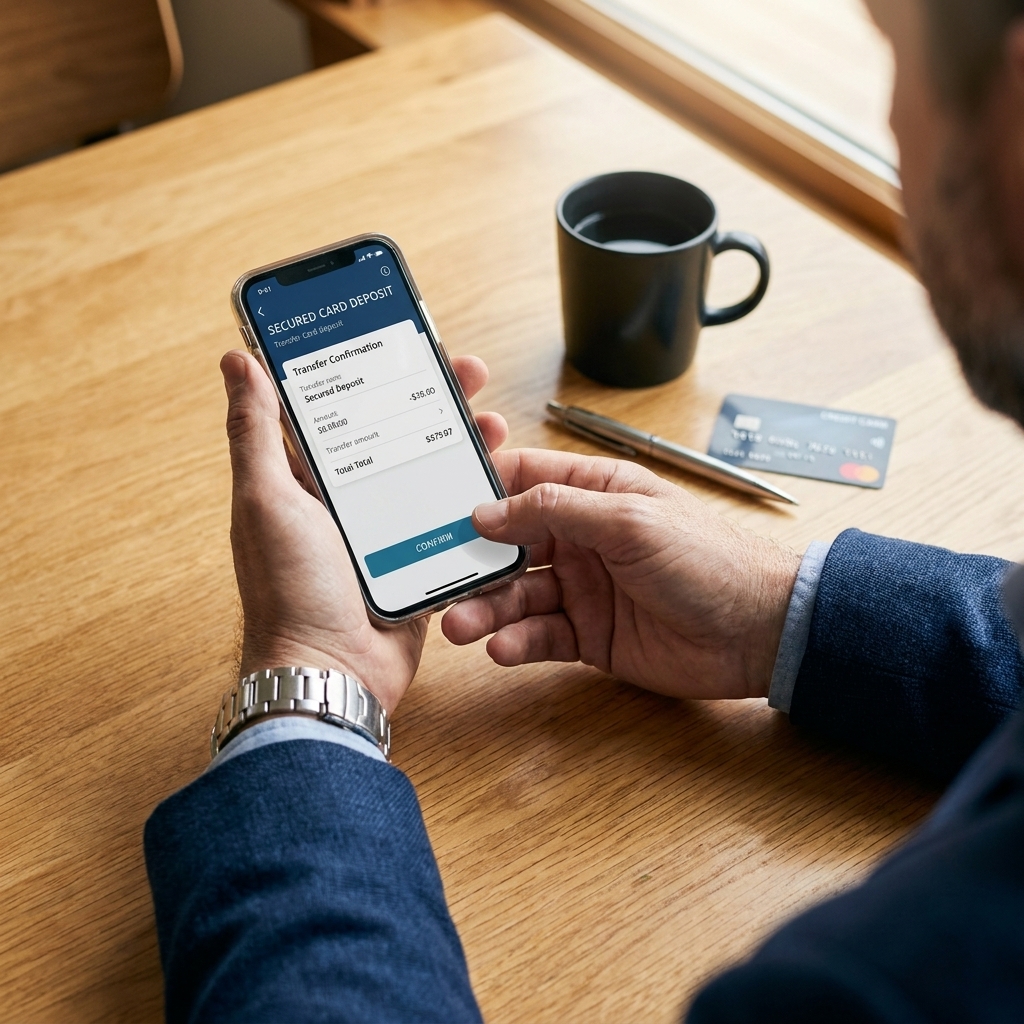
A secured card works like this: you put down a refundable deposit (often $200 to $500), and that usually becomes your credit limit. The card reports to the credit bureaus like a normal credit card.
What to look for:
- Reports to all three bureaus (verify before applying)
- No monthly maintenance fee and no unnecessary add-ons
- A clear graduation path (reviews for an upgrade to unsecured after consistent on-time payments)
- Reasonable annual fee (or none)
What to avoid: secured cards with multiple upfront fees that eat your deposit before you even swipe the card. If the offer feels fee-heavy or confusing, walk away.
Option B: Student credit card (if you qualify)
If you are a student, student cards can be a smoother on-ramp than secured cards because they often come with low limits, beginner-friendly approvals, and fewer fees.
The same rules apply: you want a card that reports to all three bureaus and does not nickel-and-dime you with junk fees.
Option C: Credit-builder loan (good if you do not want a card yet)
Credit-builder loans are usually offered by credit unions, community banks, or fintech lenders. Instead of receiving money upfront, the “loan” amount is held in a savings account while you make monthly payments. When you finish, you get the money.
This builds installment loan history and can be a helpful second account later, but you do not need it on day one if a secured card is easier.

Option D: Authorized user (helpful, not the whole plan)
If a trusted family member has a well-managed credit card, they may be able to add you as an authorized user. If the card reports authorized user history, you could benefit from their account age and payment history.
Three important cautions:
- You are attached to their behavior. If they run up balances or pay late, it can hurt you.
- It should not be your only move. Lenders like to see at least one account that is truly yours.
- Some lenders may discount authorized user history during underwriting, even if it helps your score.
Step 4: Apply with a plan
When you apply for a credit card, you typically trigger a hard inquiry. A couple is fine. A spree of applications in a week is how beginners accidentally dig a hole.
My beginner rule: apply for one card, get approved, and use it perfectly for 3 to 6 months before you even think about a second card.
One more thing, because people mix this up: rate-shopping protections often apply to certain loan inquiries (like auto loans or mortgages made within a short window). They generally do not apply to credit cards, so rapid-fire card applications can add up fast.
If you are unsure about approval, look for issuers that offer prequalification tools. Prequalification is not a guarantee, but it can reduce wasted inquiries.
Step 5: Use credit like training wheels
This is where most people get tripped up. A credit card is not extra income. It is a reporting tool. Your goal is to generate on-time payments and low utilization.
Also, let me make this unmistakable: you do not need to carry a balance or pay interest to build credit. Paying in full is ideal if you can do it.
Keep it simple
- Put one small recurring bill on the card (gas, a streaming subscription, or your phone bill).
- Keep your spending under 10% to 30% of the credit limit.
- Pay it down early if your balance starts creeping up.
Example: If your card has a $300 limit, try to keep the balance between $10 and $90. Lower is usually better when you are new.

Step 6: Automate to avoid late payments
If you only follow one piece of advice in this entire guide, make it this: late payments are expensive and sticky. They can hurt your score for years.
What “on time” really means
In credit reporting terms, a payment typically has to be 30+ days past due before it can be reported as late to the bureaus. But do not take comfort in that. You can still get hit with a late fee, penalty APR, and a mess of stress the moment you miss the due date.
My autopay setup
- Turn on autopay for at least the minimum payment.
- Set a calendar reminder 7 to 10 days before the due date to pay the rest (if you are carrying any balance).
- Keep a small buffer in checking so autopay never bounces.
If your budget is tight, minimum autopay is your safety net. Then you can make extra payments manually whenever you can.
Step 7: Understand utilization dates
There are two important moments each month:
- Your statement closing date: the balance that gets captured on your statement.
- Your payment due date: when payment is required to avoid a late fee and late mark.
Often the statement balance is what gets reported to the bureaus. But it is not universal. Some issuers report on a different day (month-end, a set day, or after you pay). If you are unsure, check your issuer’s support page or send a quick message and ask what date they report.
Practical move: If you are building credit from scratch, pay the card down to a small balance a couple days before the statement closes, then pay the rest by the due date.
Mini example: If your statement closes on the 18th and your due date is the 15th of the next month, pay most of your balance around the 16th or 17th so the 18th statement shows a low number. Then pay whatever remains in full by the 15th to avoid interest.
Step 8: When you will get a score
If you are truly starting from zero, it usually takes at least about six months of reported activity to generate a FICO score. It depends on the bureau having enough recent data to score you.
You might see other “educational” scores sooner, but lenders commonly use FICO models. During these first six months, the win is consistency, not perfection.
Step 9: Add a second account (optional)
After you have 3 to 6 months of clean history on your first account, you can consider adding one more account to strengthen your profile.
Good second steps:
- A second no-annual-fee card (only if you can keep utilization low)
- A credit-builder loan through a credit union if you want installment history
Do not add accounts just to add accounts. Each new account is a new bill, a new due date, and a new chance for an avoidable mistake.
Common mistakes to avoid
- Applying for store cards back-to-back: easy approvals can still equal too many inquiries.
- Maxing out a low-limit card: a $300 limit card at $290 is nearly 100% utilization.
- Paying late “only once”: one late can do more damage than months of good behavior can fix quickly.
- Closing your first card: keep it open if it has no annual fee and you can manage it responsibly.
- Ignoring fees: monthly maintenance fees and weird add-ons are a red flag.
Simple habits that work
- Check your balance weekly so you never get surprised.
- Pay early if your balance is climbing.
- Keep the card active with small purchases so it does not get closed for inactivity.
- Review your credit reports a few times per year to catch errors before you need a loan or apartment.
FAQ
Can I build credit without a credit card?
Yes. A credit-builder loan or being an authorized user can help. That said, for most people, a low-limit card used lightly and paid on time is the simplest path to building a strong foundation.
How much should I spend on my first credit card?
Small and predictable is best. I like one recurring bill. If your limit is low, aim to keep the balance under 10% to 30% of the limit, and pay it down before the statement closes if you can.
Do I have to carry a balance to build credit?
No. You can pay in full every month and still build credit. Carrying a balance just means paying interest for no scoring advantage.
Do debit cards build credit?
No. Standard debit cards pull money from your bank account and typically do not report to the credit bureaus. Some fintech products market “credit-building debit” features, but those work because they report a credit line or loan-like account, not because normal debit spending builds credit.
What if I get denied?
First, do not panic apply elsewhere. Wait for the adverse action letter and read the reason. Then pivot to a secured card from a reputable bank or a credit union, or consider a credit-builder loan. Denials happen, even to people doing everything right.
Where should I monitor my score?
Many free apps show VantageScore, while many lenders use FICO. Both can be useful for trends, but do not be surprised if numbers differ. If you want to see a true FICO score, check whether your bank or credit card issuer offers a free FICO score, or consider a paid FICO service if you are actively preparing for a major application.
How long until I can qualify for a rewards card?
Often within 6 to 12 months of clean history, depending on income, utilization, and how strict the issuer is. Focus on the habits first. Rewards are a bonus, not the mission.
Your checklist
- Pull your credit reports and confirm you are starting clean
- Open one starter account (secured card, student card, or credit-builder loan)
- Use the account lightly and keep utilization low
- Turn on autopay for at least the minimum payment
- Pay before the statement closes when possible
- Repeat for six months, then consider a second account
If you want to build credit from scratch without stress, remember this: you are not trying to beat the system. You are simply feeding it clean data each month. That is how scores grow.