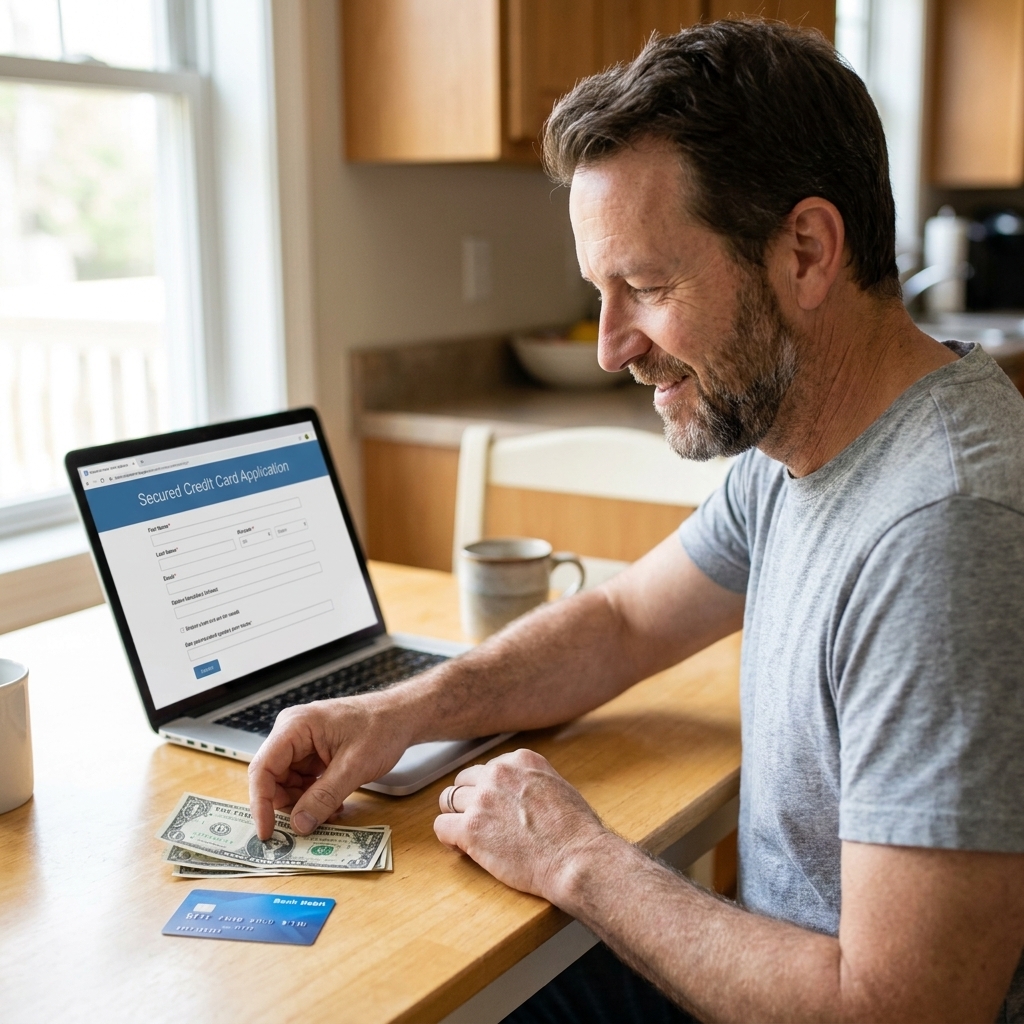
Step-by-step: choose a secured card that reports to the bureaus, use it strategically, keep utilization low, pay on time, and work toward graduating to an un...
If you’re trying to build (or rebuild) credit, you’ll hear the same advice on repeat: “Get a credit card and use it responsibly.” True. But the type of card you start with matters, especially if your score is bruised from late payments, collections, or maxed-out cards.
I’ve been on both sides of this. In my early twenties, I was dodging collection calls with a 515 score and a stomach full of anxiety. Later, as a loan officer at a credit union, I watched people get approved or denied based on a few lines on a credit report. Here’s the good news: a bad score is a temporary math problem. It is not always a fast fix, and negative marks can take time to fade, but the right card can help you start stacking positive history with less stress.

The simplest difference
Secured credit card
A secured card requires a refundable security deposit. That deposit usually becomes your credit limit. Example: you put down $200, your limit is $200.
The deposit reduces the lender’s risk, which is why secured cards are often easier to get approved for when you’re rebuilding.
Unsecured credit card
An unsecured card does not require a deposit. Your credit limit is based on your credit profile and income. These cards usually offer better perks and lower costs, but they can be harder to qualify for if your credit is new or damaged.
Do they build credit the same way?
Yes, if the card reports to the credit bureaus (Experian, Equifax, TransUnion). A secured card and an unsecured card can both build credit because your payment history and utilization get reported the same way.
What matters most is not whether the card is secured or unsecured. It’s whether you:
- Pay on time every month (payment history is the biggest factor in FICO and VantageScore models).
- Keep utilization low. There’s no magic number, but many people see better scores when reported utilization is lower, often under 30% and sometimes under 10%.
- Let the account age and avoid unnecessary applications.
Quick reality check: If you miss payments on a secured card, it can damage your credit the same way an unsecured card can. “Secured” does not mean “safe from credit damage.”
One more trap to avoid: Make sure the card actually reports to at least one bureau, and ideally all three. Also, a prepaid card is not the same thing as a secured credit card. Many prepaid cards do not build credit at all.
Approval: what’s realistic?
Secured cards: easiest path
Secured cards are typically the best option if you have:
- No credit history (true beginners)
- Recent late payments or charge-offs
- A bankruptcy in the last few years
- High utilization or maxed-out cards
- Thin credit (only 1 or 2 accounts)
You’re mainly being evaluated for identity verification, ability to fund the deposit, and sometimes checking account history depending on the issuer. Secured cards can still be denied, but for many people rebuilding, they are the simplest on-ramp.
Unsecured cards: more sensitive
Unsecured approval is more sensitive to your credit file. You’ll have better odds if you have:
- On-time payments showing for the last 6 to 12 months
- Lower revolving utilization
- No very recent derogatory marks
- Stable income relative to existing debt
If you’re rebuilding, you may still qualify for certain unsecured “starter” or “credit-builder” cards, but watch fees closely.
Costs and fee traps
Secured card costs
- Deposit: Often $200 to $500 minimum. Some let you add more later for a higher limit.
- Annual fee: Some secured cards have $0 annual fee. Others charge $25 to $50 or more.
- APR: Usually high, but APR only matters if you carry a balance.
My rule: If you can swing it, treat a secured card like a debit card. Charge a small amount, then pay it down quickly. Interest is avoidable if you pay in full.
Unsecured card costs
- No deposit: That’s the big advantage.
- Annual fee: Many are $0. But some “rebuild” cards charge hefty annual or monthly fees.
- APR: Also often high for rebuilding profiles.
Fee red flag: Be cautious with cards that pile on monthly maintenance fees, processing fees, or “account setup” fees. Paying $150 a year in fees to build credit is like paying a cover charge to enter your own financial future. Sometimes it’s the only option, but often it’s not.
Pros and cons
Secured cards: pros
- Easier approval with bad credit or no credit
- Clear path to start positive payment history now
- Deposit is usually refundable if you close the account in good standing
Secured cards: cons
- Upfront cash required for the deposit
- Lower starting limits can make utilization tricky
- Some secured cards have annual fees and limited perks
Unsecured cards: pros
- No deposit required
- Often better rewards, benefits, and long-term value
- Higher limits are possible, which can help utilization
Unsecured cards: cons
- Harder approval if you’re rebuilding
- Bad offers exist, especially “fee harvester” style cards
- Higher limits can tempt overspending if you’re not ready

Which is best for you?
Choose a secured card
A secured card is usually your best move if you’ve been denied recently, you’re starting from scratch, or you’re coming back from major credit damage. It’s often the easiest way to get a card that reports and starts rebuilding momentum.
Also consider secured if you’re working on rebuilding habits. A smaller limit can be a feature, not a bug, when you’re trying to stop overspending.
Choose an unsecured card
If you have some positive history and you can get approved for an unsecured card with $0 annual fee and clean terms, that can be the better long-term keeper account.
It’s especially helpful if you can get a limit that lets you keep utilization low without constantly micro-managing balances.
How to build credit right
1) Keep the reported balance small
Your score reacts to what gets reported to the bureaus. Many issuers report the statement balance (or a balance around the statement date), but reporting timing can vary by issuer.
A solid target:
- Beginner target: under 30% utilization
- Strong target: under 10%
If your limit is $300, 10% is $30. That’s why secured cards can require more precision. The simple fix is paying early, even weekly, so the balance that gets reported stays low.
2) Put 1 to 2 bills on autopay
Pick predictable expenses like streaming, a phone bill, or a small subscription, then set autopay for at least the minimum. Late payments are the fastest way to undo progress.
3) Pay in full when you can
Interest doesn’t help your score. Paying in full protects your budget so you can keep going long enough for your credit age to grow.
4) Think twice before closing your first card
Length of credit history matters. Closing a card can also affect your utilization by removing available credit. If your first card has no annual fee and you can manage it, keeping it open can help long-term.
That said, do not keep a card with an annual fee you can’t justify just for the sake of “age.” If you close an account in good standing, it may still remain on your credit reports for years, depending on the bureau and scoring model.
Graduation
Sometimes, yes. Many issuers review your account after several months of on-time payments and may “graduate” you to an unsecured card and return your deposit.
Graduation policies vary by issuer. Timelines can range from around 6 months to 12 months or longer, and some cards do not graduate at all. A few issuers may require you to request a review. If graduating matters to you, confirm the policy before applying.
Picking a good secured card
- Reports to all three bureaus
- $0 annual fee if possible
- Clear deposit rules (minimum deposit, how refunds work, whether you can add more later)
- Clear graduation policy (if offered)
- Reputable issuer (major bank or credit union, transparent fees)
Other options to consider
If a credit card is not the right fit today, you still have paths:
- Credit-builder loans (often through credit unions or fintech lenders)
- Authorized user on someone else’s well-managed card (works best when the primary cardholder pays on time and keeps balances low)
- Student cards if you are eligible
Common questions
Will a secured card raise my score faster?
Not automatically. Scores improve from on-time payments, low utilization, and time. A secured card can raise your score faster in a practical sense because it’s often the card you can get approved for today, so you can start building positive history sooner.
Is a secured card “bad”?
No. Think of it like training wheels. Plenty of people use a secured card for 6 to 18 months, graduate, and move on. There’s no shame in using the tool that fits your current situation.
Can I get my deposit back?
In most cases, yes, if you close the account in good standing or if the issuer graduates you and refunds it. If you owe a balance when you close, the issuer may apply your deposit to what you owe.
Should I get more than one card to build credit faster?
Only if you can manage it without missing payments. One well-managed card beats three messy ones every time. If you’re brand new or rebuilding, start with one, build a streak of on-time payments, then consider adding another account later.
Quick decision guide
- If you’ve been denied or your credit is in rough shape: start with a secured card from a reputable issuer that reports to all three bureaus.
- If you can qualify for an unsecured card with low or no fees: that’s often the best long-term value.
- If you’re not sure: prioritize approval odds and low fees. The “best” card is the one you can use perfectly for the next 12 months.
If you want the simplest plan, here it is: get one card you can qualify for, keep the reported balance low, pay on time every month, and give it time. In my case, that basic formula helped me climb from a 515 to the 800s. Your timeline may look different, but the system is mostly predictable once you know what it’s measuring.