
A practical, no-shame breakdown of credit freezes vs. fraud alerts, plus credit locks, ChexSystems, and what to do if you are already seeing fraud.
Getting denied for a checking account can feel like a gut punch, especially when you walked in just trying to do something normal, like set up direct deposit or open an account for bills. I have been on the receiving end of “computer says no” moments in my own financial comeback, and I know how quickly that rejection can turn into shame.
Take a breath. A deposit-account denial is often tied to a screening report, not a judgment about you as a person. And it is often fixable, especially if the report has wrong information.
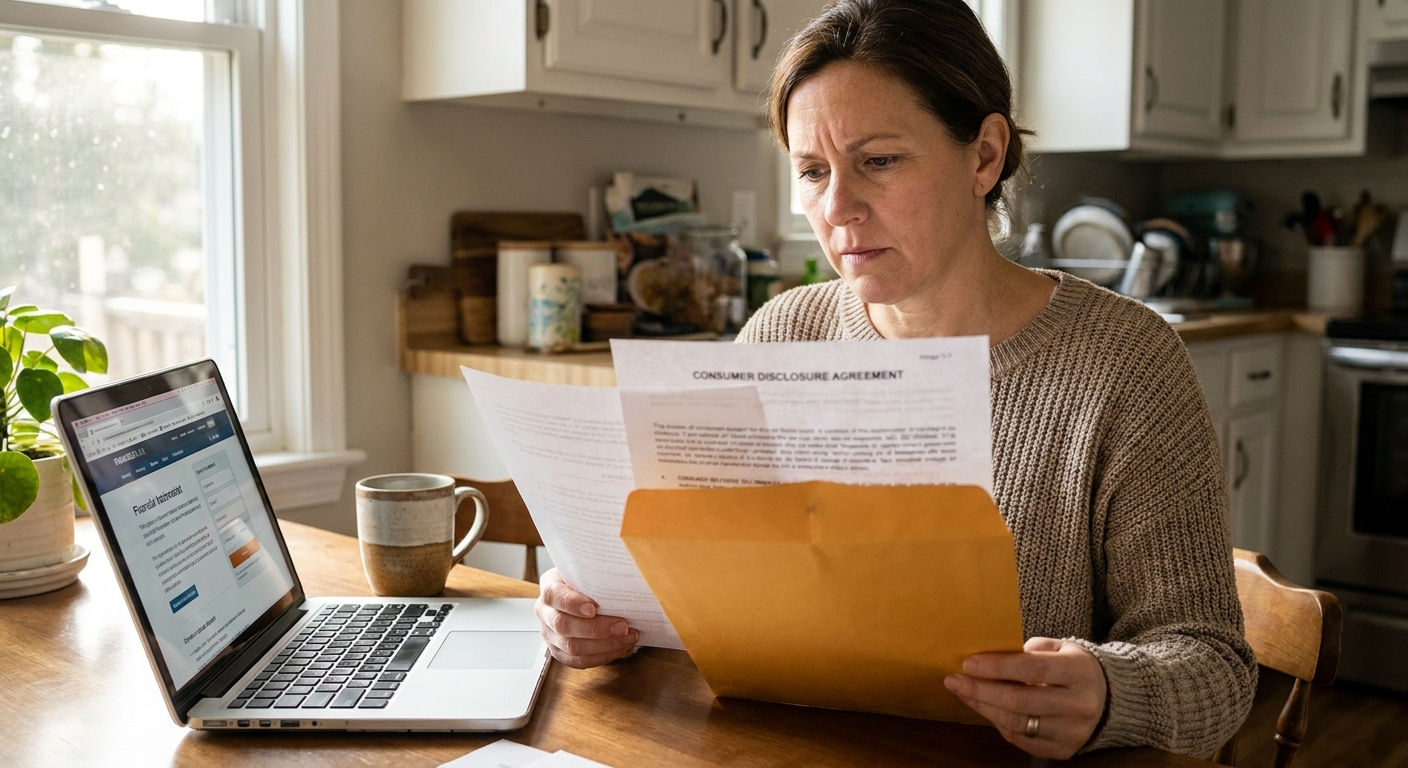
In this guide, I will show you how to use your denial notice to identify the right reporting agency, how to request your ChexSystems consumer disclosure through official channels, what details to review line by line, and what to do next if you spot a factual error.
ChexSystems is not a credit score
When a bank or credit union checks ChexSystems, they are not pulling your FICO score. They are typically evaluating deposit-account risk.
- Credit reports (Experian, Equifax, TransUnion) track credit accounts, balances, payment history, and inquiries.
- ChexSystems and similar consumer reporting agencies focus on checking and savings account history such as unpaid negative balances, suspected fraud flags, and account closures for cause.
So if you have good credit but still got denied for a bank account, that can happen. And if your credit is bruised, you still might be able to open an account if your deposit-account screening report is clean.
Use your denial notice
When you are denied (or approved only with restrictions), the bank often sends an adverse action notice. Do not toss it. That notice usually includes:
- The name of the consumer reporting agency used (often ChexSystems, but it could be another specialty agency)
- Contact information for that agency
- A statement that the agency did not make the decision and cannot explain the bank’s decision
- Information about your right to request a free copy of your report within the time period listed on your notice (commonly 60 days)
Key point: request the report from the agency named in your notice. Many people assume it is always ChexSystems, but some institutions use other screening tools. Your notice is your roadmap.
Other screening agencies to know
ChexSystems is the name most people hear first, but it is not the only game in town. Depending on the bank, your adverse action notice may name a different specialty consumer reporting agency, such as:
- Early Warning Services (EWS)
- TeleCheck
This is exactly why the notice matters. You want to pull the disclosure from the agency the bank actually used.
Request your ChexSystems disclosure
If your notice names ChexSystems, you are looking for what ChexSystems calls a consumer disclosure. That is essentially your ChexSystems report.
The cleanest approach is to go through ChexSystems directly using their official request options. Typically, you can request your disclosure:
- Online through the ChexSystems consumer portal
- By phone through their automated system
- By mail using a written request
Regardless of the method, expect identity verification. You may be asked for information such as your name, Social Security number, date of birth, and current address. If you have moved recently, double-check what you enter. Address mismatches can slow things down.
If you choose mail, include copies (not originals) of identification documents if requested, and keep proof of mailing.

Timing and what you should receive
If you were denied an account, you generally have the right to request a free disclosure tied to that adverse action, as long as you request it within the deadline listed in your notice (commonly 60 days). Follow what your notice says.
Your disclosure should list items like reporting institutions, dates, account status codes, and any negative events associated with deposit accounts.
What to review on your report
When you get your disclosure, do not just skim the first page. Go through it like you are auditing your own file. These are the big areas I want you to check:
1) Personal information
- Name spelling, suffixes, and variations
- Date of birth
- Social Security number (often masked, but check for obvious errors)
- Current and prior addresses
Why it matters: mixed files happen. A wrong address or name variation can pull in someone else’s negative record, especially if you share a similar name.
2) Reported accounts
For each listed item, identify:
- The bank or credit union that reported it
- The account type (checking, savings)
- Dates (opened, closed, reported)
- Status or reason codes explaining what happened
If you do not recognize the institution at all, flag it. It could be identity theft, a mixed file, or a bank name you do not recognize because of a merger.
3) Balances owed to a bank
This is one of the most common denial triggers. Look for:
- Any unpaid negative balance amount
- Fees added after closure
- Whether the item shows paid or unpaid
If you already paid an old balance, you want the report to reflect that accurately. “Paid” does not guarantee approval, but it is usually better than “unpaid,” and it can expand your options.
4) Returned checks or misuse codes
Some records include codes that suggest repeated overdrafts, returned deposits, or account misuse. Even if you remember overdrafting years ago, verify that:
- The dates match your timeline
- The institution is correct
- The description is not overstated (for example, implying fraud when it was a simple negative balance)
5) Fraud or identity flags
If your report contains any fraud-related notation and it is not accurate, treat it as urgent. Fraud indicators can lead to automatic denials across multiple banks.
6) Inquiry history
ChexSystems can show inquiries from banks that have screened you. Inquiries are not always “bad,” but they help you confirm which institutions have been checking your file and when.
If you find an error: dispute it
If you spot a factual mistake, the next move is to dispute with ChexSystems and, in many cases, also follow up with the bank that furnished the information. Keep it simple and documentation-driven.
How to dispute effectively
- Dispute one item at a time when possible, and be very specific about what is wrong.
- State the correction you are requesting (for example: “This account does not belong to me,” or “Balance was paid on this date and should show paid with $0 owed.”)
- Attach proof: settlement letters, receipts, bank statements showing payoff, or a letter from the bank confirming the error.
- Keep copies of everything you send and note dates.
ChexSystems, like other consumer reporting agencies, must investigate disputes and respond within required timeframes. In many situations, that is about 30 days (and can be longer in specific cases, such as when additional information is provided during the investigation). When they finish, you should receive results and an updated disclosure if something changes.

If identity theft is involved
If the item looks like it came from identity theft, add documentation that supports that claim. If you can, file a report at IdentityTheft.gov and save your FTC identity theft report. You can also consider placing a fraud alert or security freeze with the relevant consumer reporting agencies, depending on your situation and what was compromised.
What not to expect
Even a successful dispute does not force a bank to approve your application. Banks set their own policies. What a dispute can do is make sure you are being evaluated on accurate information.
If the info is accurate: still options
Sometimes the report is correct, and the denial is still painful. If that is where you are, you still have options.
Ask what accounts you qualify for
Some institutions will not open a standard checking account, but they may offer:
- A second-chance checking account
- An account with no overdraft features
- An account with different funding requirements
Second-chance accounts can be genuinely helpful, but read the fine print. They may come with monthly fees, fewer features, lower limits, no overdraft, and sometimes requirements like direct deposit or a minimum balance.
Pay any balance owed
If you have an unpaid negative balance showing, paying it can help with future approvals and can stop the debt from bouncing between collection agencies. If you pay, keep proof and check your ChexSystems file later to confirm it updates.
Try a different institution
Banks and credit unions do not all use the same screening systems, and they do not all weigh items the same way. A community bank or credit union may be more flexible, especially if you can explain what happened and show that the issue is resolved.
Know that banks may use more than reports
Even with a clean screening report, a bank can still say no based on internal policies, past relationship history, or other risk systems they use. That is frustrating, but it is also a reason not to spiral. If one bank will not work with you, another one might.
Quick checklist
- Find the adverse action notice and identify the consumer reporting agency named.
- Request your consumer disclosure from that agency through official channels within the time window listed on your notice.
- Review personal info, reported accounts, balances owed, fraud flags, and dates.
- If something is wrong, dispute with documentation.
- If it is accurate, ask about second-chance options or try another institution.
FAQ
Will ChexSystems hurt my credit score?
No. ChexSystems screening is separate from your credit reports and credit scores.
How long does ChexSystems keep negative info?
ChexSystems is widely described as keeping records for up to five years. Your disclosure should show dates so you can see how old a record is.
Can I apply while a dispute is pending?
You can try, but approval depends on the bank’s policies and the information they see at the time they screen you. A pending dispute does not automatically pause screening decisions.
If I fix an error, will I be approved?
No. Correcting errors helps ensure you are evaluated fairly, but each bank sets its own account-opening rules.
A final word
A bank account denial can make you feel like you are stuck in financial time-out. You are not. This is paperwork and process, and you are allowed to ask for the data being used against you.
Get the disclosure, review it like a detective, and if something is wrong, dispute it calmly with proof. That is how you turn a frustrating “no” into your next clean step forward.