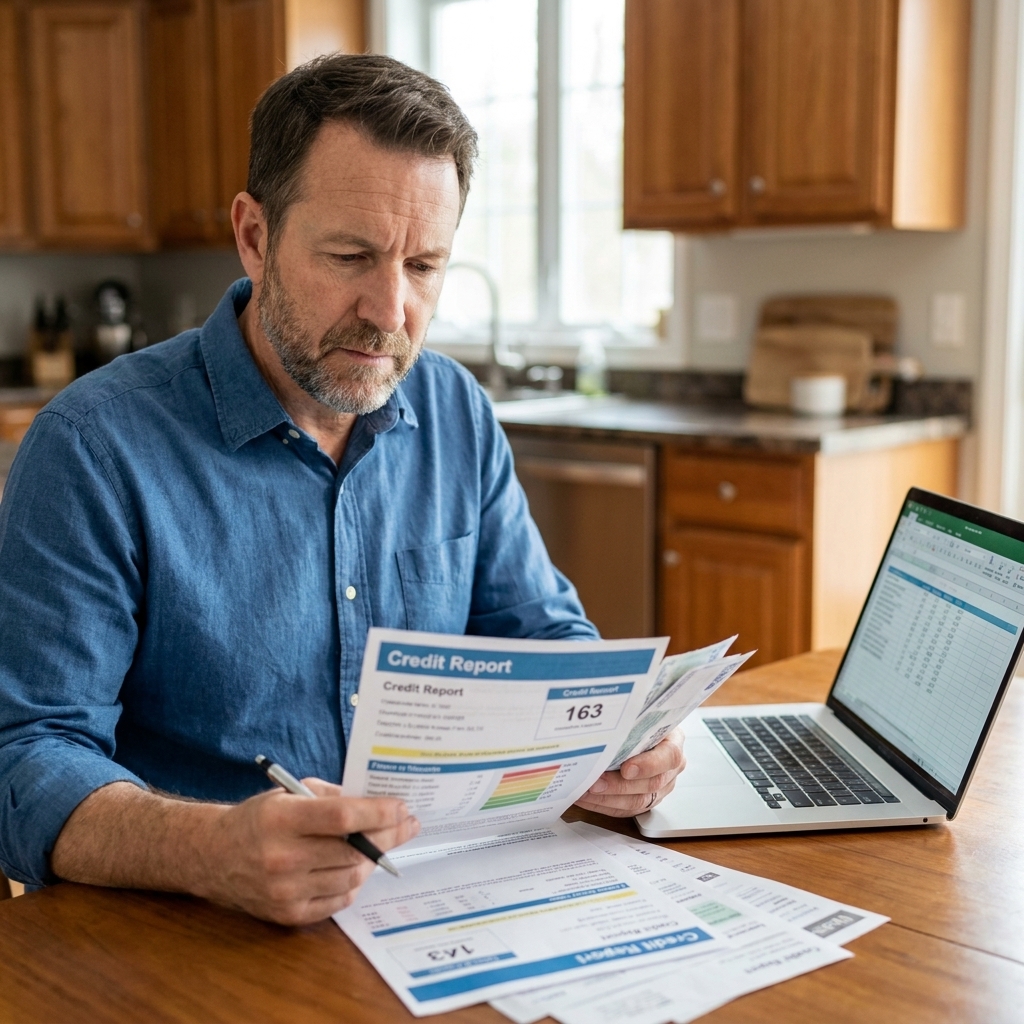
A clear breakdown of what actually moves a FICO score, plus practical steps to improve payment history, utilization, credit age, mix, and inquiries.
If you have one or two late payments dragging down an otherwise solid credit history, a goodwill letter may be worth trying. It is a respectful request asking your lender to forgive a past mistake and update the credit bureaus to remove the late mark.
There is no “right” to a goodwill removal. If the payment was truly late, the creditor is allowed to report it. You are asking for a favor. Some lenders will do this, especially when the late payment was an exception and you have a strong track record.
One important reality check: many lenders have blanket policies against changing accurate late payment reporting, often for compliance and consistency reasons. So even a perfect letter can still get a “no.”

What a goodwill adjustment is
A goodwill adjustment is when a creditor voluntarily agrees to stop reporting a late payment (or multiple lates) to the credit bureaus, even though it was accurate.
It is not:
- A dispute claiming the late payment is wrong
- A guarantee that the bureaus will delete it (the creditor has to send the update)
- A negotiation like “pay for delete” (common with collections, not with original creditors)
Think of a goodwill letter like this: “You are right, I was late. I have been responsible since, and I am asking you to help me move forward by removing this one negative mark.”
When goodwill letters work best
In my experience as a credit counselor, goodwill requests have the best odds when your story looks like an exception, not a pattern.
Best situations
- One isolated late payment (especially a 30-day late) surrounded by on-time history
- The account is still open and in good standing
- You have paid on time since, ideally for 6 to 12+ months
- You have a long relationship with the lender (years matter)
- A reasonable explanation: auto-pay glitch, travel, medical situation, temporary job disruption, mailing delay
- You caught up quickly and did not let it roll into repeated 60/90-day lates
Harder situations
- Multiple late payments across several months
- Recent late payments from the last 1 to 3 months
- Charged-off or closed accounts with serious delinquencies
- Late payments tied to a hardship plan where the lender’s policy is strict
If you have a pattern of lates, a goodwill letter is not useless, but you may need a different approach: rebuild a clean streak first, then ask.
Confirm the late is real
Do not skip this step. I have seen people apologize for a “late” that was really a reporting error.
- Pull your reports from all three bureaus (Equifax, Experian, TransUnion). Look for which bureau(s) show the late, and the exact month.
- Check your statements and bank history for the due date and when the payment posted.
- Confirm the delinquency bucket: 30, 60, 90 days late.
Those “30/60/90” labels refer to how many days past due the account was when it was reported, not how many days after you clicked “pay” or when your bank processed it.
If you find evidence the payment was on time or misapplied, skip goodwill and file a factual dispute with documentation instead.

Write a goodwill letter that gets read
Most goodwill letters fail because they are too long, too emotional, or too vague. You want calm, specific, and respectful.
The letter formula
- Identify the account: name, address, account number (last 4 digits is fine), and the specific month reported late
- Acknowledge responsibility: one sentence, no excuses
- Explain briefly: what happened and why it was unusual
- Show the fix: auto-pay enabled, reminders set, budgeting changes
- Point to your track record: years as a customer, on-time streak, current balance status
- Make a clear ask: request a goodwill adjustment to remove the late payment from bureaus
- Close politely: thank them and include contact info
Keep it short
A single page is ideal. Two pages is usually too much. The person who can approve your request is busy, and you want to make “yes” easy.
Skip the threats
This is a favor request. If your letter reads like “fix this or else,” you are pushing the wrong buttons.
Where to send it
You have three practical options. I recommend trying them in this order.
1) Secure message or email
If your lender offers secure messaging inside your online account, use it. It creates a record, it is easy for them to route internally, and you can follow up without playing phone tag.
2) Mail to the right office
For a traditional letter, send it to:
- The lender’s credit bureau reporting address (sometimes listed in statements or on their site)
- Their executive office or customer relations team
Use regular mail or certified mail if you want delivery confirmation. Certified is not required, but it helps if you are tracking follow-ups.
3) Call for routing
Front-line reps may not have authority to change reporting, but they can often tell you where goodwill requests go and what documentation (if any) is preferred.

Goodwill letter examples
These examples are written as complete letters with fictional details, so you can see what “done” looks like. Then rewrite your own using your real information.
Example 1: One-time 30-day late
Subject: Goodwill adjustment request for late payment reporting
To whom it may concern,
I am writing to request a goodwill adjustment regarding my Citywide Bank Visa account ending in 4421. My credit report shows a 30-day late payment for January 2024. I understand the payment was late, and I take full responsibility.
This late payment was an isolated mistake caused by an auto-pay issue after I replaced a debit card. As soon as I realized what happened, I brought the account current and have paid on time since. I have re-enrolled in auto-pay and set up calendar reminders to ensure this does not happen again.
I value my relationship with Citywide Bank, and I have worked hard to maintain a strong payment history. As a courtesy, would you consider removing the late payment reporting for January 2024 from the credit bureaus?
Thank you for your time and consideration. I appreciate any help you can provide.
Sincerely,
Jane Doe
(555) 013-8842
[email protected]
1287 Elm Street, Apt 4B, Columbus, OH 43215
Example 2: Long-time customer
Subject: Request for goodwill removal of late payment
Hello,
I have been a customer with Harborview Credit Union since 2016, and I am grateful for the service you have provided. I am reaching out about my auto loan account ending in 9037.
My credit report shows a late payment for September 2023. I acknowledge that it was late and I am not disputing that. This was a one-time situation caused by a short-term job transition, and it does not reflect how I typically manage my accounts.
Since then, I have maintained consistent on-time payments and have set up automatic payments from my checking account to prevent a repeat.
As a courtesy, would you be willing to make a goodwill adjustment and remove the late payment reporting for September 2023 with the credit bureaus?
Thank you for your consideration.
Sincerely,
Michael Rivera
Example 3: Before a mortgage or rental
Subject: Goodwill adjustment request ahead of a major application
To whom it may concern,
I am writing regarding my Northline Card Services account ending in 1180. My credit report reflects a late payment for March 2024. I take responsibility for the late payment and understand it was reported accurately.
I am currently preparing for a major credit decision, and this single late mark is having an outsized impact compared to my overall payment history. The late payment happened because I was traveling internationally and missed a due date after a billing notification went to an old email address. I have maintained on-time payments since then and updated my contact information and alerts.
If possible, I am requesting a goodwill adjustment to remove the late payment reporting for March 2024 as a courtesy. I value our relationship and would be grateful for your help.
Thank you for your time,
Sincerely,
Ashley Kim
(555) 010-2279
Example 4: Temporary hardship
Subject: Goodwill request for late payment reporting removal
Hello,
I am contacting you about my Summit Financial personal loan account ending in 7712. My credit report shows late payment reporting for June 2023. I understand the payment was late and I take responsibility.
At that time, I experienced a temporary hardship due to an unexpected medical issue and time away from work. The situation has been resolved, and my account is now current and in good standing. I have also put safeguards in place, including auto-pay and a small emergency fund, to prevent this from happening again.
Would you consider a goodwill adjustment to remove the late payment reporting for June 2023 from the credit bureaus?
Thank you for considering my request,
Sincerely,
Daniel Thompson
What to say and avoid
Say this
- “I understand the payment was late, and I take responsibility.”
- “This was an isolated incident.”
- “Here is what I changed so it does not happen again.”
- “Would you consider a goodwill adjustment as a courtesy?”
Avoid this
- Long emotional backstories
- Blaming the lender, the app, your bank, or “the system”
- Threatening CFPB complaints (save complaints for actual errors or misconduct)
- Claiming it is “illegal” to report accurate late payments (it is not)
- Begging or oversharing
Follow-up plan
If you send one letter and never follow up, you are reducing your odds. Goodwill removals often come from persistence that stays polite.
A simple schedule
- Day 0: Send the goodwill request.
- Day 14: Follow up (same channel). Ask if they received it and if additional info is needed.
- Day 30: Send a second request, slightly shorter. Mention you are still in good standing.
- Day 45 to 60: Escalate to executive office or customer relations if you started at a generic address.
Follow-up message
Hello, I am following up on my goodwill adjustment request for my account ending in 4421 related to late payment reporting for January 2024. Could you please confirm whether it was received and whether a review decision has been made? Thank you for your time.
How long updates take
If they agree, the creditor will generally send an update to the bureaus on their next reporting cycle. Most lenders report monthly, but timing varies by creditor and by bureau.
- Common timeline: about 30 to 45 days
- Sometimes faster: 1 to 2 weeks if they submit an off-cycle correction
- Sometimes slower: 60+ days depending on internal processing
After about a month, pull fresh reports to verify the late payment was removed from each bureau where it appeared.
If they will not do it
If you get a “no,” it does not necessarily mean your letter was bad. It often means the lender simply will not adjust accurate reporting.
Here are practical next steps that can still move your score and your approvals in the right direction:
- Build time and clean history: late payments matter less as they age, especially if everything after them is perfect.
- Lower credit utilization (for credit cards): this can sometimes offset a single late more than people expect.
- Add positive data: keeping other accounts current, and potentially adding a new account only if it fits your budget and plan.
- Separate the fee from the reporting: you can ask for a late fee to be reversed as a courtesy, but do not assume that changes credit reporting. They are two different decisions.
Also, know what not to ask for. Do not ask a lender to report something untrue, “re-age” a current account to hide delinquency, or delete accurate history as if it never happened. Keep your request focused: a courtesy adjustment to accurate reporting, if their policy allows it.
Common questions
Will removing one late payment help my score?
Often, yes. Payment history is one of the biggest factors in major credit scoring models, including most FICO versions. The impact depends on how recent the late was, how many other negatives you have, and your overall profile. A recent 30-day late can sting more than people expect.
Can I ask to remove multiple lates?
You can ask, but your odds often drop as the number of lates increases. If you have a cluster of lates during one short period, it can still be worth a goodwill attempt, especially if the account is now strong and current.
Should I include documents?
Usually no. Goodwill is not about proving an error. If you include anything, keep it minimal. For example, a simple statement showing the account has been current since. If your situation involves medical hardship, do not attach private records unless specifically requested.
What if they say no?
Some lenders have strict policies. If you get a “no,” you can:
- Try again later after a longer on-time streak
- Send the request to a different department (executive office)
- Focus on rebuilding with perfect payments and lowering utilization so your score rises despite the late
Is this pay for delete?
No. Pay for delete is usually a collection account negotiation. A goodwill letter is a courtesy request to an original creditor to adjust accurate reporting.
If you feel weird about it
I get it. Asking for mercy from a lender can feel humiliating, especially if you already carry shame about your credit. But this is not a character test. It is a math problem, and one late payment can be the difference between getting approved and getting denied.
Write the letter like a calm adult who had one slip, fixed it, and took steps to prevent it from happening again. Then follow up politely.
If you want the highest chance of success, keep your request short, keep your account current, and give them every reason to say yes, while staying realistic that some lenders will not make goodwill adjustments at all.